
How to wash gym clothes so they stop smelling and keep their stretch
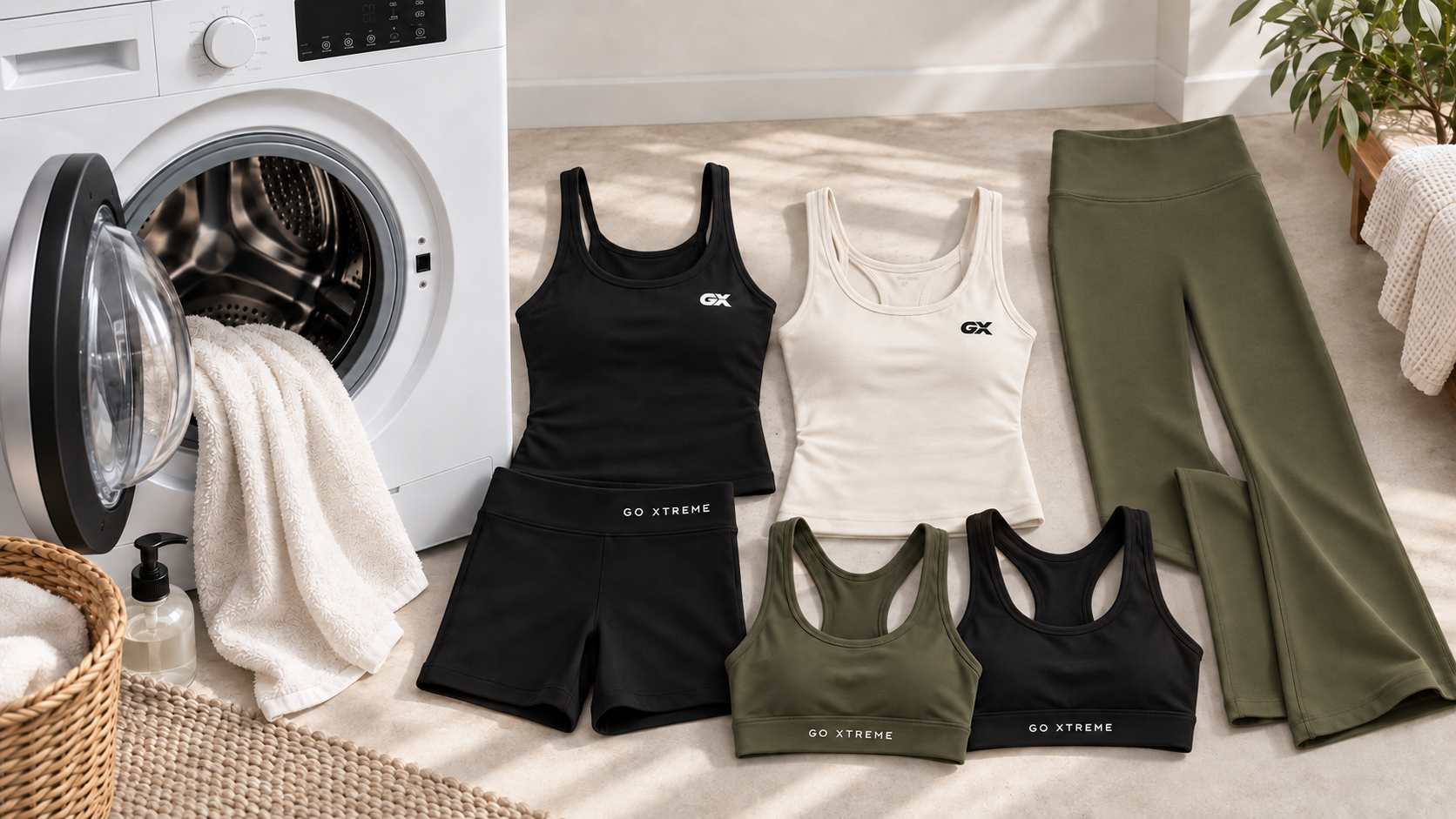
How to Wash Gym Clothes So They Stop Smelling
Wash performance activewear in cold water, turn it inside out, use a short or gentle cycle with the recommended amount of detergent, skip fabric softener, and air-dry it away from strong direct heat. If your gym clothes still smell after washing, the problem is often a combination of body oils, detergent residue and bacteria remaining in the fabric.
Why gym clothes can smell again after washing
Fresh sweat itself usually has very little smell. The odour develops when sweat, body oils and bacteria build up in the fabric.
Performance fabrics such as polyester, nylon and elastane are designed to move moisture and dry quickly, but they can also hold onto body oils and odour if they are not washed properly.
Two habits make the problem worse: leaving damp gym clothes inside a bag for hours and regularly using fabric softener.
Fabric softener can leave a coating on synthetic fibres. Over time, that coating may reduce moisture-wicking performance and make sweat, oils and odour harder to wash out.
That is why some activewear can smell perfectly clean when it comes out of the washing machine but start smelling again once you begin training.
How to wash gym clothes properly
1. Air them out as soon as possible
Do not leave sweaty activewear sitting wet inside your gym bag overnight.
If you cannot wash it immediately, take it out of the bag and hang it somewhere ventilated until laundry day.
This is especially useful in warm and humid weather, where damp clothing can stay wet for longer.
2. Turn activewear inside out
Most sweat, body oils and skin contact happen on the inside of the garment.
Turning your activewear inside out allows the wash water and detergent to reach the areas that need cleaning most.
It also helps protect the outer surface, prints and branding from unnecessary friction during washing.
3. Wash in cold water
Cold water is usually the safest choice for performance activewear.
Repeated exposure to high temperatures can gradually affect elastane fibres and reduce stretch recovery over time.
Always check the garment's individual care label first, but for most GX performance pieces, a cold wash is the better everyday option.
4. Choose a short or gentle cycle
Activewear generally does not need an aggressive wash cycle.
A short or gentle cycle helps reduce unnecessary friction while still cleaning everyday sweat and dirt.
It can also help protect smooth performance fabrics, seams and printed details.
5. Use the right amount of detergent
More detergent does not necessarily mean cleaner gym clothes.
Using too much can leave detergent residue behind in the fibres, which may contribute to stiffness and lingering odour.
Follow the detergent manufacturer's recommended dosage based on your load size and water conditions rather than automatically adding extra detergent.
6. Skip fabric softener
Fabric softener is one of the easiest things to remove from your activewear routine.
It can coat synthetic fibres and interfere with the moisture-wicking properties performance clothing is designed to provide.
If your gym clothes smell after washing, removing fabric softener from your routine is a good place to start.
7. Wash activewear with similar clothing
Whenever possible, wash performance activewear with other lightweight sportswear.
Heavy cotton towels can shed lint, while clothing with exposed zips, hooks or rough hardware can rub against delicate performance fabrics.
If necessary, use a mesh laundry bag for smaller or more delicate activewear pieces.
How to dry activewear
Air-drying is generally the safest option for performance clothing.
Hang your activewear in a well-ventilated area away from excessive heat. If strong direct sunlight could fade the colour, dry the garment in the shade instead.
Performance fabrics usually dry considerably faster than heavier cotton garments.
Avoid tumble drying unless the care label specifically says it is suitable. Repeated high heat can gradually weaken elastane and affect the garment's fit and recovery.
GX gives garment-care guidance on its fabric page, including air-drying recommendations and avoiding direct ironing over logo applications.
Always follow the specific care label on your individual garment.
What to do if gym clothes already smell
If activewear still smells after a normal wash, do not immediately use more detergent.
Start by soaking the garment in cool water before washing it again. Then wash it normally without fabric softener and make sure it is thoroughly air-dried.
A detergent formulated for sportswear or synthetic fabrics can also help remove accumulated body oils and residue.
Some people use diluted white vinegar during laundry to help with residue and odour, but only do this if both the garment care instructions and your washing-machine manufacturer allow it. Never mix vinegar with bleach or other household cleaning chemicals.
Persistent odour does not automatically mean the garment needs to be replaced. It can also come from detergent buildup, body oils, repeated damp storage or an overloaded washing machine.
How to protect the stretch in leggings
Leggings and other stretch garments often contain elastane or spandex.
These fibres gradually lose elasticity through normal wear, but excessive heat and harsh chemicals can speed up the process.
To help your leggings retain their shape:
- Wash them cold unless the care label says otherwise.
- Avoid chlorine bleach.
- Avoid unnecessary high heat.
- Air-dry them whenever possible.
- Do not iron directly over printed or heat-applied logos.
If your leggings are rolling down during workouts, washing is not necessarily the cause.
Waistband construction, sizing, fabric compression and overall fit can all affect how leggings stay in place. You can read more in our guide to why leggings roll down.
What about cotton gym clothes?
Cotton and cotton-blend training clothing behaves differently from synthetic performance fabric.
Cotton usually absorbs more moisture and therefore takes longer to dry after a workout or wash.
Synthetic performance fabrics generally dry faster, which is one reason they are popular for training.
For cotton-spandex garments such as some men's training tees, washing cold and turning the garment inside out is still a good routine.
Again, always check the care label because fabric blends can vary between products.
How often should you wash activewear?
Activewear worn for a sweaty workout should ideally be washed after each use.
If the session was extremely light and the garment stayed dry, your routine may vary, but repeatedly wearing sweat-soaked activewear without washing allows body oils and odour to accumulate.
The most important thing is not to leave damp garments sitting inside a closed gym bag.
In one line
Wash gym clothes cold and inside out, use the correct amount of detergent, skip fabric softener, choose a gentle cycle and air-dry them away from excessive heat.
Those simple habits can help your GX activewear stay fresher, retain its shape and perform properly for longer.
Questions people ask
Why do my gym clothes still smell after washing?
Sweat itself is nearly odourless; the smell is bacteria living in the knit and feeding on it. A warm wash with fabric softener leaves a film that seals the bacteria in, so the smell returns as soon as the garment warms up. Wash cold without softener, and soak a bad case in water with a cup of white vinegar first.
Can I use fabric softener on activewear?
No. Softener coats the fibres, which stops a synthetic knit moving sweat to the surface and traps odour. Skip it, and skip dryer sheets for the same reason.
Should activewear be washed in hot or cold water?
Cold. Heat is what tires spandex, and most of the stretch loss people blame on age is from hot washes and the dryer. Cold water with a normal detergent cleans a synthetic knit perfectly well.
How often should I wash leggings?
After every sweaty session, and before they sit in a bag overnight. In Indian humidity a wet garment left in a gym bag grows the bacteria that cause the permanent smell within hours.