
What to wear to the gym in an Indian summer (and the monsoon after it)
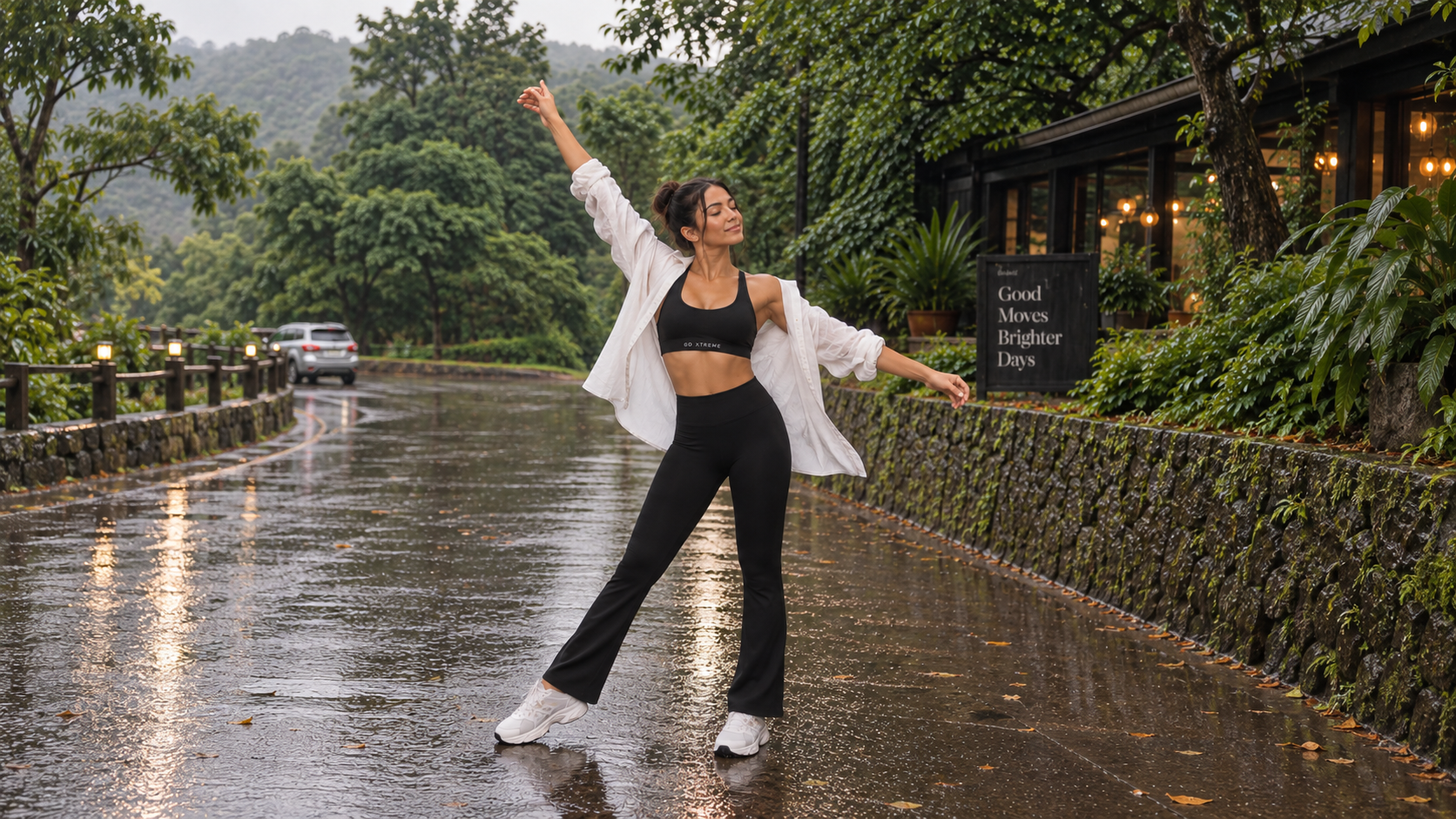
In an Indian summer the fabric decides your session before the workout does. Wear a light nylon-spandex or polyester-spandex knit that moves sweat off the skin, a high waistband that stays put when you bend, and nothing cotton. GX cuts its women's leggings, bras and tanks for exactly this: training in heat and humidity, with an Indian fit.
Why the gym feels harder from April to October
Two things happen at once. Air temperature climbs past 35 degrees in the north and west, and in the coastal cities the air is already so full of water that sweat cannot evaporate. Sweat only cools you when it dries. In Mumbai, Chennai or Kolkata it mostly does not, so it sits on the skin and soaks into whatever you are wearing.
That is why the same tee that feels fine in a Delhi February feels like a wet towel in a Mumbai July. The garment has to do the drying the air will not.
The three things that matter, in order
1. Fabric. Nylon or polyester blended with spandex. Both are hydrophobic, so they push sweat to the outer surface instead of holding it. GX's Flowline Flare Leggings, for example, are 75% nylon and 25% spandex, a blend that stretches four ways and keeps its shape through a session. Cotton does the opposite: it absorbs, stays wet and gets heavy. Keep it for the walk home.
2. Waistband. The bend in a squat, a hinge, a burpee is what rolls a waistband down, and in heat a damp waistband rolls faster. Look for a wide, high band that sits flat and does not need adjusting. If it folds over in the changing room, it will fold over under a barbell.
3. Cut. A racerback or square-neck tank leaves the shoulders and upper back open, which is where heat leaves the body. A cropped or 7/8 legging runs cooler than a full length. Sets in the same knit are worth it in summer because the pieces dry at the same rate.
City by city
| City | What the air does | What to wear |
|---|---|---|
| Delhi, Jaipur, Lucknow | Dry heat to 42 degrees, then a wet August | Open knits, light colours, a tank over a tee. Switch to wicking layers when the monsoon arrives |
| Mumbai, Goa | Humid all year, monsoon June to September | Thin synthetic knits that spread sweat; an anti-odour finish matters; a change of tee for the commute |
| Chennai, Kochi | Humid heat, October rain | Same as Mumbai; prioritise fast-drying pieces because nothing dries on the line |
| Bengaluru, Pune | Mild, but afternoon sun and evening humidity | The easiest city for training; a mid-weight knit works, a light layer for early sessions |
| Kolkata, Guwahati | Heavy humidity May to October | The hardest case: lightest knits, cropped lengths, pieces you can rinse and hang |
The monsoon is not a break
Where we are this week (mid-September 2026): the monsoon is withdrawing from the north-west and the sweatiest fortnight of the year is under way in Delhi and the plains; Mumbai and the south still have weeks of humid air ahead. Everything below applies now.
The rain drops the temperature and raises the humidity, so the sweat problem gets worse, not better. The two weeks after the monsoon withdraws, mid-September in the north and October in the south, are the sweatiest training window of the year: the rain has stopped but the air has not dried. Train early or late, and wear the lightest knit you own.
Care, so the fabric keeps working
Wash synthetics cold, inside out, with no fabric softener. Softener leaves a film that clogs the knit and stops it moving sweat. Hang to dry out of direct sun. Do not leave a wet set in the gym bag overnight; in Indian humidity that is where the smell starts.
Where to start
- Women's leggings, including the Flowline Flare Leggings and the Sculpt Full-Length Leggings
- Sports bras and tanks, including the Aura Tank
- Sets in one knit, so both pieces dry together
- The fabrics GX uses and the size guide. Free delivery across India above the order value shown at checkout.
Questions people ask
Is cotton okay for the gym in Indian heat?
For a walk, yes. For anything that makes you sweat, no. Cotton absorbs sweat and holds it, so the tee gets heavy and stays wet. A synthetic knit moves the sweat to the surface where it can dry.
Do I need different gym clothes in Delhi and Chennai?
Yes, a little. Dry heat rewards open, breathable knits and lighter colours. Humid cities reward fabric that spreads sweat thin so it can evaporate at all, and an anti-odour finish matters more.