
Compression leggings vs regular leggings: what the difference actually is, and which to buy
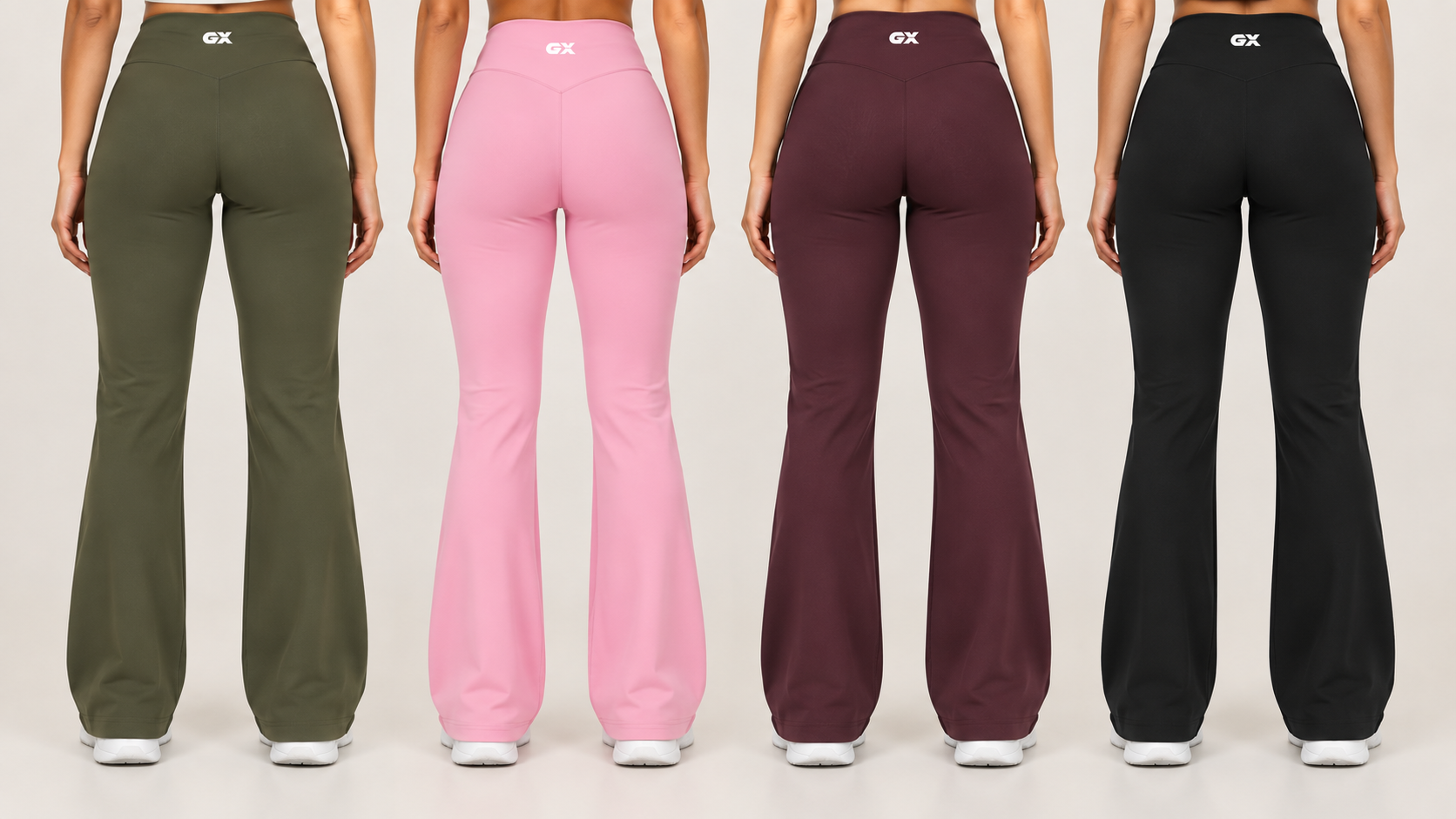
Compression leggings are cut from a denser knit with a higher spandex share, so they hold the muscle firmly, stay in place through big movements and pull back to shape after every stretch. Regular leggings use a lighter, looser knit and put comfort first. Choose compression for lifting, running and HIIT; choose regular for yoga, walking and days that are mostly sitting.
What "compression" means on a legging
There is no standard and no certification; the word describes a fabric and a fit, not a measured pressure. In practice a compression legging has three things a regular legging does not:
- A denser, heavier knit. More yarn per square centimetre, so the fabric feels substantial and stays opaque under stretch.
- More spandex. Around 20 to 25% in a nylon or polyester knit, against the 8 to 15% common in lighter leggings. Spandex is what makes the fabric snap back after a squat instead of bagging at the knee.
- A closer cut. Sized to sit firm all over, with a wide high waistband, because a firm leg with a loose waist rolls.
Medical compression garments, the graduated kind for circulation, are a different product with measured pressures and are not what gym brands sell.
What a regular legging is for
A regular or "everyday" legging is lighter, softer and cut with more ease. It moves with the body rather than holding it, dries fast because there is less fabric, and is the right choice for yoga, Pilates, walking, travel and the office day that ends at a class. Its weaknesses are the mirror image of its strengths: a lighter knit is more likely to lighten in a deep squat and to bag at the knee after a season.
Side by side
| Compression | Regular | |
|---|---|---|
| Knit | Dense, heavier | Lighter, softer |
| Spandex share | About 20 to 25% | About 8 to 15% |
| Fit | Firm all over, wide high waistband | Closer to a second skin with ease |
| Best for | Lifting, running, HIIT, sports | Yoga, walking, travel, all-day wear |
| Squat-proof | Usually, in the correct size | Depends on the pair; check |
| Warmth in Indian heat | Warmer at rest, dries well when moving | Cooler at rest, dries fastest |
| Lifespan | Longer if washed cold | Shorter under heavy training |
Reading the product page
The composition line settles most of the question. On the GX store the Sculpt Full-Length Leggings are a 78% nylon, 22% spandex knit, which is the compression end of the range, and the Flowline Flare Leggings are 75% nylon, 25% spandex with a high waist and a soft flare, which is a compression knit in a shape you can wear out of the gym. Both print the blend on the page; a legging sold without its composition is a legging you are buying blind. The fabric page explains the knits.
How compression should fit
Firm everywhere, with no gap behind the knee or the calf, and no pinching at the waist. You should still squat to full depth and breathe fully with the band on. If pulling them past the calf is a fight, or the waistband leaves a deep mark within minutes, go up a size. Compression worn a size too small fails the squat-proof check and rolls at the waist because the knit is stretched flat at rest. The size guide gives waist and hip in centimetres; when in doubt on a compression piece, take the larger size.
The recovery question, honestly
Brands often imply that compression speeds recovery or improves performance. The research is small and mixed. What most people can feel is support: less muscle wobble on a jump, a firmer feel under a barbell, and a legging that is still where it started at the end of the session. That is a good reason to buy them. A measurable strength gain is not, and any brand promising one is selling the word rather than the garment.
Heat
A denser knit is warmer standing still and warmer on a walk. Moving, a nylon-spandex compression knit moves sweat to the surface and dries; the heat guide covers why that matters more than weight. For a humid outdoor session where you are mostly walking, a lighter regular legging is the cooler choice.
Which to buy first
If you lift, run or do HIIT more than twice a week, buy one compression pair in your measured size and run the squat test. If your week is yoga, walking and errands, buy the regular pair. Most people who train seriously end up with one of each, and the compression pair is the one that still looks new next year.
Questions people ask
Are compression leggings better for the gym?
For lifting, running and HIIT, usually yes: the firmer knit holds the muscle, stays in place through big movements and is more likely to be squat-proof. For yoga, walking and long days, a lighter regular legging is more comfortable. Most people who train more than three times a week end up owning one of each.
How tight should compression leggings be?
Firm all over with no gap at the knee or the back of the calf, but you should still be able to squat to full depth and take a full breath with the waistband on. If they pinch at the waist or you cannot pull them past the calf without a fight, go up a size.
Do compression leggings help recovery or performance?
The evidence is mixed and mostly small studies; the honest answer is that most people feel more supported and some report less muscle wobble, and that is reason enough. Nobody should buy compression leggings expecting a measurable strength gain.
What fabric are compression leggings made of?
A dense nylon-spandex or polyester-spandex knit with a higher spandex share, commonly 20 to 25%, and a heavier weight than a regular legging. The composition on the product page is the quickest way to tell the two apart.