
Working out when Delhi's air is bad: indoor routines and what to wear
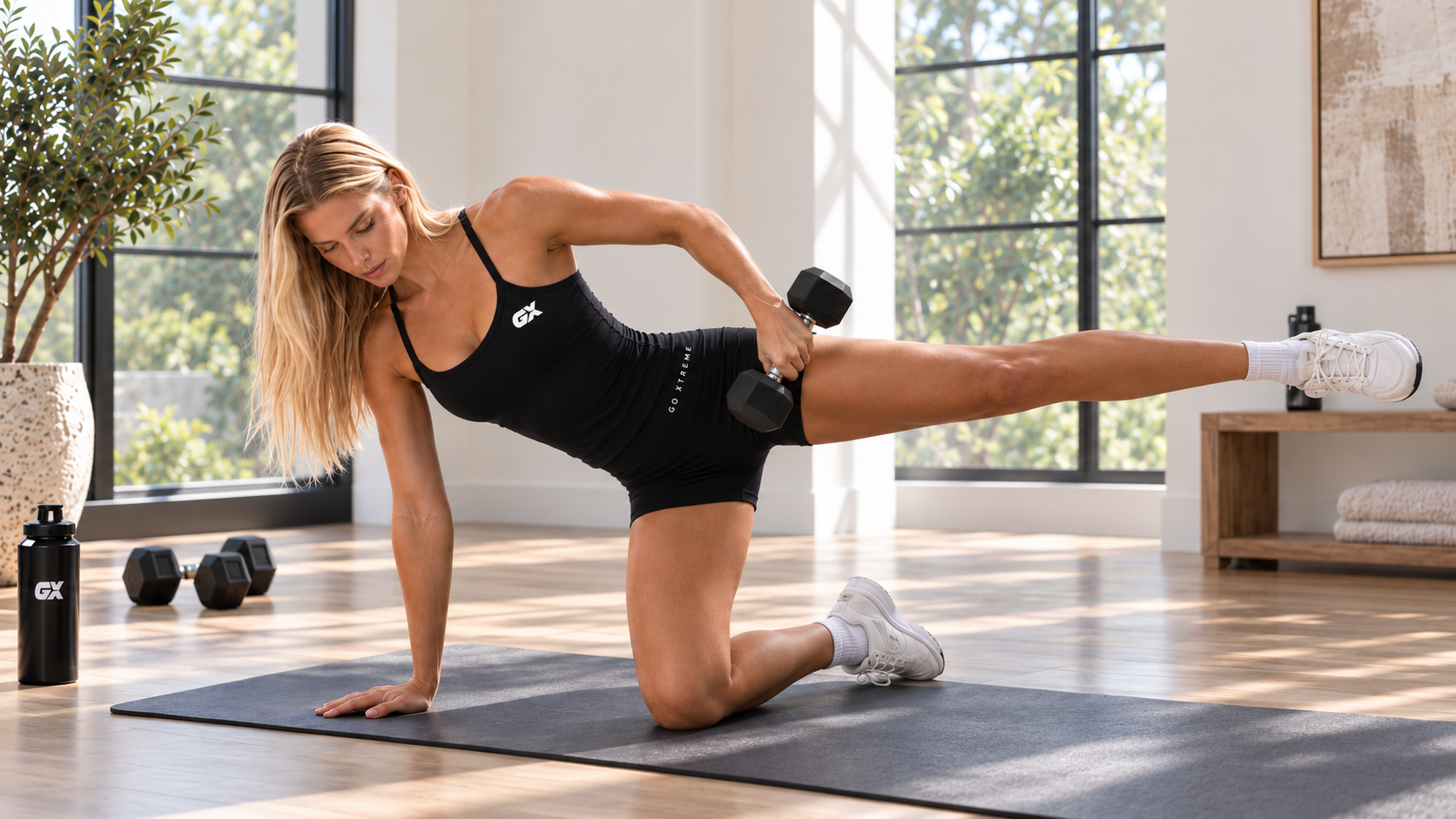
When Delhi's AQI crosses 200, move the workout indoors. Train in one closed room with a purifier running, keep the effort at a level where you can still speak in short sentences, and wear a quick-drying nylon-spandex layer, because sweat has nowhere to go in a sealed room. That keeps a training habit going through the six bad-air weeks instead of losing it until February.
Why bad air matters more when you train
At rest you breathe about six litres of air a minute. In a hard run or a fast circuit that climbs to several times as much, and most of it comes in through the mouth, which skips the filtering the nose does. So the same hour outside on a poor-air day delivers far more of the fine particles (PM2.5) to the lungs when you are training than when you are walking to the shop.
Delhi's bad-air season usually runs from late October to January and is at its worst in November, when crop-stubble smoke, festival fireworks, cold still nights and low wind all arrive together. On those mornings a layer of cold air sits over the city and holds the smoke close to the ground until the sun breaks it up. That is why the 6 a.m. run that works in March is the worst choice of the day in November.
Read the AQI, then decide
India's AQI runs from 0 to 500 in six bands. Use the reading for your own area for the hour you plan to train, from the CPCB Sameer app or a nearby monitoring station, rather than yesterday's city average.
| AQI | Band | What to do with the session |
|---|---|---|
| 0 to 100 | Good, satisfactory | Train outside as normal |
| 101 to 200 | Moderate | Outside is fine for most people; stay off main roads and shorten the hardest intervals. If you have asthma, move indoors |
| 201 to 300 | Poor | Train indoors |
| 301 to 400 | Very poor | Indoors, purifier on, moderate effort only |
| 401 to 500 | Severe | Indoors, and keep it light: mobility, stretching or an easy strength session |
If you feel chest tightness, a cough that will not settle or wheezing during a session, stop. That is the air, not your fitness.
Set up the room before you start
- One room, closed. Shut the doors and windows of the room you will train in. A sealed room still lets some outside air in, but much less.
- Purifier on early. Run a purifier with a HEPA filter for about half an hour before you start, and leave it running. It needs to be sized for the room; a small unit in a big living room does little.
- Nothing that adds smoke. No incense, candles or frying in the next room on a bad-air day.
- A fan for the sweat. A closed room has still air, and sweat dries slowly in still air. A fan on low keeps you cooler without opening a window.
- A mat and a band. That is the whole kit for the sessions below. A resistance band set gives the pulling and glute work that bodyweight alone misses.
Three indoor sessions that replace the outdoor week
Rotate these through the week. Each fits in a bedroom-sized space and none needs jumping, so it works in a flat with neighbours below.
1. Strength circuit (30 minutes)
Warm up for five minutes with marching, arm circles and slow bodyweight squats. Then do each move for 40 seconds with 20 seconds' rest, four rounds:
- Squats, slow on the way down
- Reverse lunges, alternating legs
- Push-ups, with hands on a bed or a sofa edge if needed
- Glute bridges with a band above the knees
- Band rows, with the band anchored round a door handle
- Dead bugs, keeping the lower back on the mat
2. Low-impact cardio (25 minutes)
This replaces the run. Two minutes of each, repeated twice, with a minute's easy marching between moves:
- Fast marching with high knees
- Step-ups on the bottom stair or a sturdy step
- Skater steps, side to side, without the jump
- Shadow boxing
- Slow mountain climbers
On a very poor or severe day, hold the pace where you can still speak in short sentences. Breathing hard indoors is better than breathing hard outdoors, but no room is perfectly clean.
3. Mobility and core (20 minutes)
For the severe days and the day after a hard circuit: cat-cow, hip flexor stretch in a low lunge, a hamstring stretch with the band, a side plank for 30 seconds each side, and a plank for a minute, three times. It keeps the routine unbroken on days when anything harder is not worth it.
What to wear for indoor training
Indoors in a closed room the problem is the opposite of the summer one. The air is still, so sweat sits on the skin. In December the room is also cold for the first ten minutes. Dress for both.
- A nylon-spandex base, not cotton. Cotton soaks up sweat and stays wet in still air, and by the second round a wet cotton tee is cold against the skin. A nylon-spandex knit moves sweat to the surface, where the fan can dry it. The Sculpt Cross-Back Sports Crop and the Core Lift Tank are both 78% nylon and 22% spandex.
- Full length in the cold months. For November and December mornings, the Sculpt Full-Length Leggings keep the legs warm through the warm-up and hold their shape through squats and lunges. In the warmer weeks of late October, the Sculpt Biker Shorts are the same fabric.
- A layer you take off. A long-sleeve top for the first ten minutes, like the Sculpt Long-Sleeve Crop, then off once you are warm.
- For men, the Apex Compression Tee is an 88% nylon, 12% spandex knit that sits close for floor work, with any light training short.
- Feet. Bare feet are fine on a mat for strength and mobility. Wear trainers for step-ups and the cardio session.
Change out of the clothes you wore outside before you start, so the commute layer stays in the hall. Wash the training kit cold and hang it to dry indoors; the washing guide covers how to keep the stretch.
When to go back outside
When your area's AQI is back under 200 for the hour you train, take the session outside again, ideally in the afternoon and away from traffic. Most years that happens in stretches through December and January, and steadily from February. The indoor routine is still worth keeping for the days in between.
The short version
Check your area's AQI for the hour you train. Above 200, train indoors in one closed room with a HEPA purifier running, a fan on low and nothing burning nearby. Use the strength circuit, low-impact cardio and mobility sessions in rotation, and keep the effort moderate when the air is very poor or severe. Wear a nylon-spandex base with full-length leggings in the cold months and a layer to take off, and save the N95 for the commute.
Questions people ask
Is it okay to exercise outdoors in Delhi when the AQI is poor?
Once the AQI is poor (201 to 300) or worse, a hard outdoor session means breathing several times more of that air every minute, mostly through the mouth. Move the session indoors, or keep it to an easy walk away from main roads. If you have asthma or a heart condition, follow your doctor's advice at lower levels too.
What is the best time of day to run outside in Delhi in winter?
Usually early to mid afternoon, when the sun has lifted the layer of cold air that traps smoke overnight. Early morning is often the worst hour of the day in November and December. Check the hourly AQI for your area before you go, not the city average from yesterday.
Should I wear an N95 mask while working out?
An N95 or N99 is for the commute, not the session. Under hard breathing it gets damp, loses its seal at the edges and makes the effort feel much harder. On a bad-air day the better answer is to train indoors and keep the mask for the walk to the car or the metro.
Does an air purifier help for home workouts?
In a closed room, yes. Shut the doors and windows, run a purifier with a HEPA filter sized for that room for half an hour before you start, and keep it running while you train. A small indoor air monitor tells you whether the room is actually cleaner than outside.