
How a sports bra should fit: the five-point check before you train in it
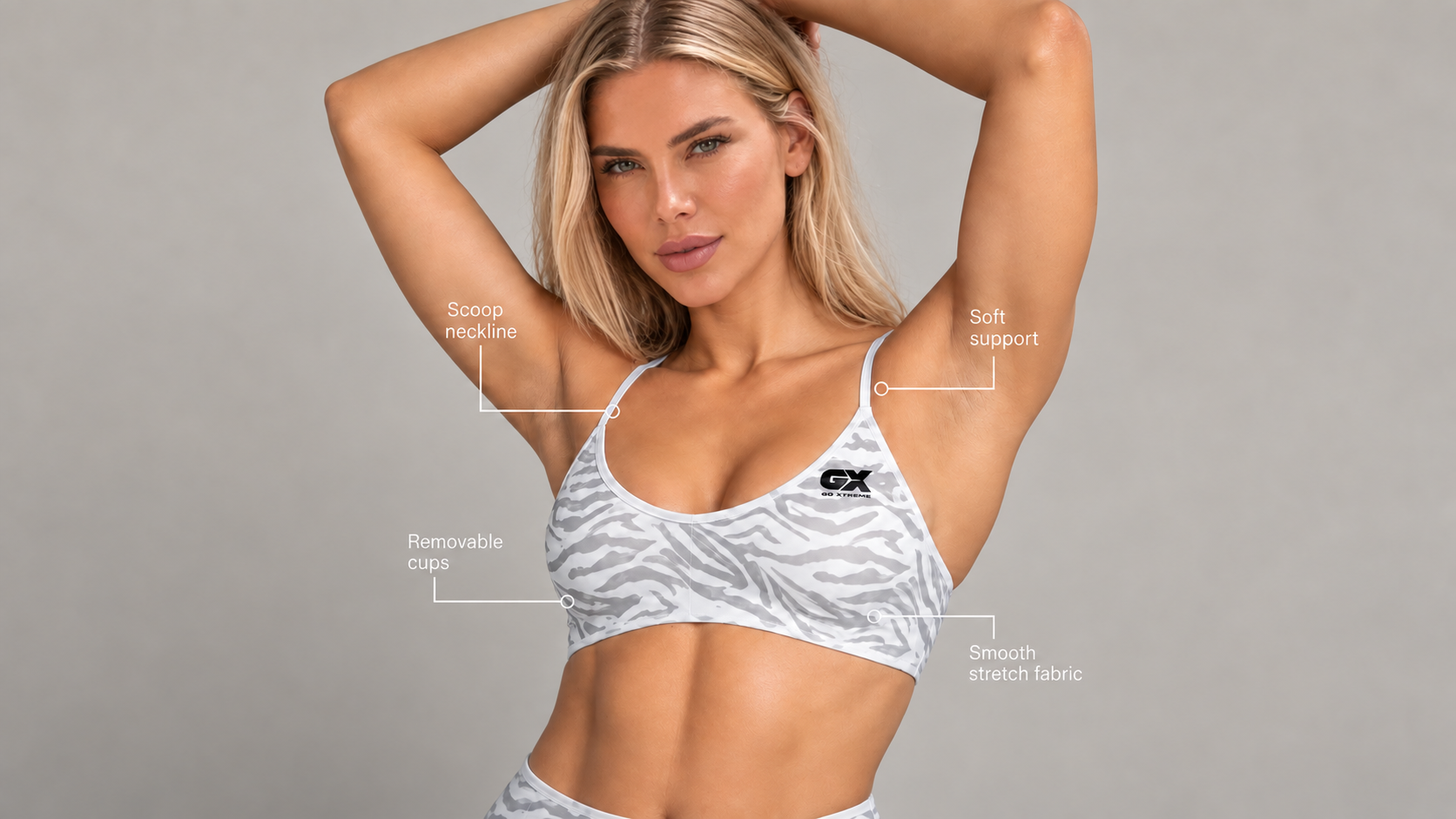
A sports bra fits when five things are true at once: the band sits level and snug all the way round, the straps stay in place without digging, the cups or the crop hold everything with nothing spilling at the top or the sides, you can take a full breath, and a jump test shows movement reduced rather than just covered. Most fit problems are the band, not the cup.
Start with the band, because the band does the work
Around eighty percent of a sports bra's support comes from the band, not the straps. Put the bra on and stand side-on to a mirror. The band should sit level, parallel to the floor, at the same height at the front and the back. If it rises at the back, it is too loose and the straps are doing the band's job, which is why they dig.
Slide two fingers under the band at the side. Snug is right; a fist is too loose; not being able to slide the fingers at all is too tight. Lift both arms above your head: the band should stay where it is. If it rides up over the ribs, go down a size or choose a design with a wider under-band.
Straps: in place, not in charge
Straps position the bra; they should not be holding weight. On a racerback or cross-back design, the straps sit flat between the shoulder blades and do not slide toward the neck when you run. On a crop, the straps are part of the knit and cannot be adjusted, so the band size decides everything: if the straps dig on a crop, the crop is too small.
Cups and coverage
Bend forward at the waist and look down. Nothing should fall out of the top. Stand up and look at the side view: the knit should lie flat against the ribcage with no gap and no overflow under the arm. A wrinkle in the fabric across the front means the cup or the crop is too big; overflow at the top means it is too small.
The jump test, done honestly
Jump on the spot ten times, then jog on the spot for twenty seconds, in front of a mirror. Watch the movement. A low-impact bra will still show some bounce; that is what it is for. A high-impact bra should reduce it in every direction: up and down, side to side, and the figure-of-eight that running produces. If you do HIIT or run and the bounce is obvious, the bra is a low-impact design worn for a high-impact job.
Low impact or high impact: choose by the bounce, not the habit
| Activity | Level | What the bra needs |
|---|---|---|
| Yoga, Pilates, walking, mobility | Low | A soft stretch knit, a compressive crop, comfort over lockdown |
| Strength training, cycling, dance | Medium | A firmer band, straps that stay put in an overhead press |
| Running, HIIT, skipping, sports | High | A wide firm band, wider straps, often separate moulded cups |
Buy for the activity with the most bounce you do each week. A high-impact bra worn to yoga is only uncomfortable; a low-impact bra worn to run causes the pain that puts people off running.
Fabric in Indian heat
A wet bra is a bra that chafes. In humid cities the knit has to move sweat to the surface and dry; a nylon-spandex knit does this, cotton does not. The Sculpt Cross-Back Sports Crop on the GX store is a 78% nylon, 22% spandex knit with crossed back straps, which is the low-to-medium-impact end of the range: built for strength sessions and studio classes rather than long runs. The sports bra range lists each piece's composition and construction on its page, and the heat guide covers the fabric side in more detail.
Sizing across brands
Sports bra sizes do not transfer between brands, and a crop sized S to L is a different system from a band-and-cup bra sized 34C. Measure the under-bust snugly in centimetres, then the fullest part of the bust, and compare both to the brand's own chart; the GX size guide gives both measurements. If you sit between sizes on a crop, take the smaller size for support and the larger for all-day wear.
When to replace it
A bra is finished when the band no longer holds on its snuggest setting, the straps have to be pulled short, or the knit has gone soft and the jump test shows more bounce than it did. Washed cold, hung to dry and worn three times a week, most last around a year.
The check in one line
Band level and snug, straps in place, nothing spilling, a full breath, and a jump test that shows movement reduced. If any of the five fails, it is the wrong size or the wrong impact level, and no amount of strap-tightening fixes either.
Questions people ask
How tight should a sports bra be?
Snug enough that two fingers fit under the band but a fist does not. The band does the support, so it should sit level all the way round and not ride up when you lift your arms. If you have to loosen it to breathe comfortably, go up a band size.
What is the difference between a low-impact and a high-impact sports bra?
Low-impact bras (yoga, walking, strength work) compress the bust against the chest with a stretch knit. High-impact bras (running, HIIT, jumping) add a firmer band, wider straps and often separate cups to limit movement in every direction. Choose by the activity with the most bounce, not your usual one.
How do I know my sports bra is too old?
When the band no longer holds on its snuggest setting, the straps have to be pulled short, or the knit has gone soft and the jump test shows more movement than it used to. Most bras worn three times a week lose their support within a year.
Can I wear a sports bra all day?
A low-impact crop or bralette in a soft knit, yes. A high-impact bra is built for support during movement and is usually too firm for a whole day. The Journal has a separate guide on wearing a sports bra as a regular bra.